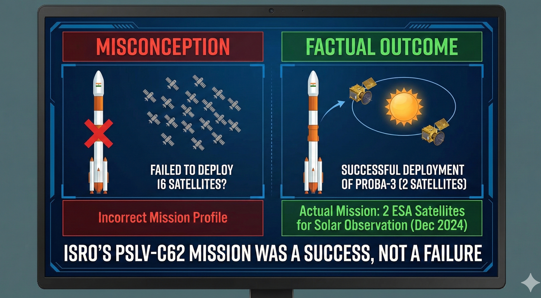
ISRO faces scrutiny after the PSLV-C62 mission's failure on January 12, 2026, marking the rocket's second consecutive third-stage anomaly and raising questions on reliability.
The initial space mission of 2026 of India failed miserably due to the third stage anomaly of the PSLV-C62 rocket. Strategic satellites such as Anvesha which is part of DRDO are feared to be lost after the vehicle deviated off course.
The vehicle, which was carrying the EOS-N1 Earth-observation satellite and 14 commercial payloads (including Nepal- and UK-based), experienced roll disturbances and drops in pressure during PS3 burnout and could not insert its orbit.
Mission Breakdown
The PSLV-DL was launched nominally at 10:17 AM IST on Sriharikota at the beginning of its maiden flight, making first two successful stages, but third-stage problems at the point of PS3 separation and PS4 engines firing, despite PS3 separation and PS4 engines being successfully fired. All 16 satellites proclaimed lost; maiden failure on PSLV First foreign client cargo.
Back-to-Back Failures
The same pressure drop on the third stage occurred in PSLV-C61 (May 2025) which was attributed to possible flex nozzle, propellant or casing defects. C62 was reiterated after review, which is why it adds to the schedule rush, and transparency issues after the unpublished C61 report.
Implications
- Commercial Hit: The lost revenue in foreign payloads; a 94/100 flights (94/100) success of PSLV in danger.
- Stoic Response: Chairman V. Narayanan promises comprehensive Failure Analysis Committee investigation; repeat success (PSLV-C39 2016).
- Strategic Pressure: Postpones EOS series, NewSpace push, critics point to "ostrich" denial in the view of suspected motor aging or hastened tests.