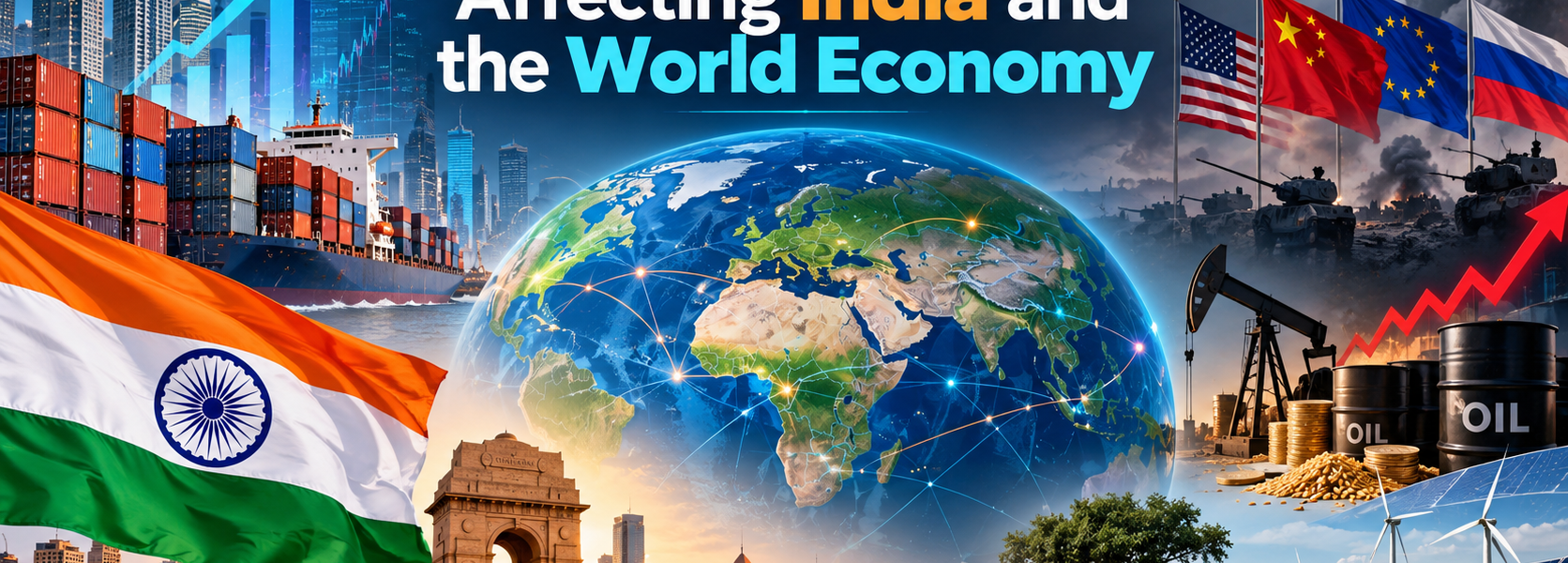
Top Global Issues Affecting India and the World Economy
The world economy is being shaped by several interconnected challenges, and their effects extend beyond individual countries. Global issues affecting India and world economy include geopolitical tensions, changing trade policies, inflationary pressures, energy-market uncertainty, supply-chain disruptions, climate-related risks and rapid technological development.
For India, developments in major economies can influence the cost of imported goods, export demand, foreign investment, currency movements and domestic business activity. At the same time, India's growing role in global trade, services, manufacturing and technology means developments within the country can also have wider international implications.
Understanding these issues is important for citizens, businesses and policymakers because global economic changes can affect household budgets, employment opportunities, investment decisions and the cost of essential goods.
Latest Global Issues Affecting India and the World Economy
Several major issues continue to influence economic conditions across countries.
1. Geopolitical Conflicts and Economic Uncertainty
Geopolitical tensions can affect economies through trade restrictions, investment uncertainty, transportation disruptions and changes in commodity prices.
Conflicts involving major energy-producing or strategically important regions can have consequences for oil, gas, shipping and insurance costs. For countries that import significant amounts of energy, these developments can create additional economic pressure.
India's large energy demand means changes in international crude oil prices can influence transportation costs, inflation and the country's import bill.
2. Global Trade Tensions
International trade is another important factor shaping the world economy. Tariffs, export controls, sanctions and changes in trade agreements can alter how goods move between countries.
Businesses may respond by diversifying suppliers or relocating parts of their production networks. This has contributed to growing attention on supply-chain resilience and manufacturing diversification.
For India, these changes can create both challenges and opportunities. Indian exporters may face weaker demand or new trade barriers, while companies could benefit when global manufacturers look for additional production locations.
3. Inflation and Interest Rates
Inflation remains an important economic concern because rising prices reduce consumers' purchasing power when wages do not increase at the same pace.
Central banks use monetary policy, including interest-rate changes, to manage inflation and economic activity. Higher borrowing costs can influence mortgages, business loans, investment and consumer spending.
Changes in major central-bank policies can also affect international capital flows. Emerging markets such as India may experience changes in foreign investment and currency-market conditions as global interest-rate expectations shift.
Key Highlights
-
Geopolitical tensions can disrupt trade, energy markets and supply chains.
-
Trade policies can change export opportunities and production costs.
-
Inflation affects household purchasing power and business expenses.
-
Interest-rate changes influence borrowing, investment and capital flows.
-
Energy prices can affect India's import costs and inflation.
-
Climate risks can disrupt agriculture, infrastructure and supply chains.
-
Artificial intelligence is changing productivity, employment and technology investment.
-
Global economic developments can influence India's exports, imports and investment.
4. Energy and Commodity Prices
Oil, gas, food and industrial commodities play an important role in the global economy.
Changes in international energy prices can affect transportation, manufacturing, electricity generation and logistics. Countries that depend heavily on imported energy can be particularly sensitive to international price movements.
For India, energy prices can influence inflation as well as production and transportation costs. Businesses may therefore monitor international commodity markets when planning expenses and investment.
5. Supply-Chain Disruptions
The global economy relies on complex networks connecting manufacturers, suppliers, ports and consumers.
Disruptions caused by geopolitical events, extreme weather, shipping problems or changes in trade policy can delay deliveries and increase costs.
India's expanding manufacturing sector is increasingly connected to these international supply chains. Building diversified sourcing networks and domestic production capacity can therefore be important for economic resilience.
6. Climate Change and Extreme Weather
Climate-related risks have economic consequences in addition to environmental effects.
Floods, heatwaves, droughts and other extreme weather events can damage infrastructure, affect agricultural production and disrupt transportation.
India's agricultural sector is particularly exposed to weather conditions. Climate-related disruptions can consequently affect food supply, rural incomes and prices.
Businesses are also increasingly considering climate risks when planning infrastructure, insurance, supply chains and long-term investments.
7. Artificial Intelligence and Technological Change
Artificial intelligence and other emerging technologies are transforming industries around the world.
AI can increase productivity and create new business opportunities, while also changing the skills required for particular jobs. The economic effects will depend on how quickly businesses adopt these technologies, how workers adapt and how governments approach regulation and infrastructure.
India's large technology and services sectors make technological developments particularly relevant to its economic outlook.
8. Changing Global Investment Patterns
International investment decisions are influenced by interest rates, political conditions, market access, infrastructure and business costs.
Companies increasingly assess the resilience of their supply chains alongside traditional investment factors. This can influence where manufacturing facilities, technology operations and other businesses are established.
India's domestic market, workforce, digital infrastructure and manufacturing ambitions make global investment trends an important area to watch.
Why These Global Issues Matter to India
The impact of global developments can reach Indian households and businesses through several channels.
-
Consumers: International energy and commodity prices can influence the cost of transportation and goods.
-
Businesses: Trade restrictions, exchange-rate movements and supply-chain problems can affect production costs and export demand.
-
Investors: Global interest rates and international market sentiment can influence investment flows and financial markets.
-
Workers: Changes in technology and international demand can create opportunities in some industries while changing employment requirements in others.
-
Government: Policymakers must balance growth, inflation, trade, energy security and financial stability.
Global Economy Explained: How One Event Can Affect India
The global economy is interconnected. A disruption in one region can move through several stages before affecting another country.
For example, a geopolitical event can disrupt shipping or energy supplies. Higher transportation or fuel costs can then raise production expenses. Businesses may pass some of these costs to consumers, potentially contributing to higher prices.
Similarly, a slowdown in a major economy can reduce demand for imported products and services. Countries that export goods or services to that market may then experience weaker external demand.
These connections explain why international developments are closely monitored by governments, businesses and financial institutions.
Latest Updates & Developments
Update 1: Global economic conditions continue to be influenced by the interaction between inflation, monetary policy, trade and geopolitical developments.
Update 2: Supply-chain resilience remains an important consideration for governments and multinational businesses.
Update 3: Energy markets continue to be strategically important because changes in commodity prices can affect inflation and production costs.
Update 4: Artificial intelligence and digital technologies are creating new investment opportunities while changing workforce requirements.
This section can be updated as new developments, official economic data and policy announcements are released.
Expert Analysis / Explained
The major global economic issues are interconnected rather than isolated. A change in trade policy can influence supply chains; a geopolitical disruption can affect energy prices; and changes in inflation can influence central-bank decisions and international investment.
For India, the combination creates both risks and opportunities. External shocks can affect imports, exports and financial conditions, while shifts in global manufacturing and technology can open opportunities for Indian businesses.
The overall effect will depend on the duration and scale of individual developments, domestic economic conditions and policy responses.
Key Facts
-
Topic: Global economic and geopolitical developments
-
Primary impact areas: Trade, inflation, investment, energy, employment and supply chains
-
India's exposure: Imports, exports, financial markets, manufacturing, technology and consumer prices
-
Major global factors: Geopolitics, monetary policy, trade, climate risks and technological change
-
Important institutions: Governments, central banks, international financial institutions and global businesses
Frequently Asked Questions
Q1. What are the major global issues affecting India and the world economy?
Major issues include geopolitical tensions, trade restrictions, inflation, interest rates, energy prices, supply-chain disruptions, climate risks and technological change. These factors can influence international trade, investment, employment, production costs and consumer prices.
Q2. How do global economic issues affect India?
Global developments can affect India through changes in oil prices, export demand, foreign investment, currency movements, supply chains and imported goods. Their impact can vary depending on the nature and duration of each development.
Q3. Why are global trade tensions important for India?
Trade tensions can change tariffs, market access and production costs. They may create challenges for Indian exporters but can also create opportunities if international companies diversify their manufacturing and sourcing networks.
Q4. How do oil prices affect India's economy?
International oil prices can influence India's import bill, transportation costs and inflation. Because India imports a substantial share of its crude oil requirements, changes in global energy markets can have broader economic effects.
Q5. Can geopolitical conflicts affect the Indian economy?
Yes. Geopolitical conflicts can affect energy prices, shipping routes, insurance costs, trade flows and investor sentiment. The scale of the impact depends on the location, duration and economic consequences of the conflict.
Q6. How is artificial intelligence affecting the global economy?
Artificial intelligence can improve productivity, automate certain tasks and create new products and services. It can also change workforce requirements, making technology adoption and skills development important economic considerations.
Q7. Where can readers follow the latest global economic developments?
Readers can follow Credible News for continuing coverage of major global and Indian economic developments, along with official government releases, central-bank communications and reports from recognised international institutions.