How Indian Government Policies Are Shaping Politics and Public Debate
Government policy has a direct connection with everyday life in India. Decisions involving employment, taxation, welfare, education, healthcare, infrastructure, agriculture and digital services can affect millions of citizens and consequently become important subjects in political discussion.
Indian politics is therefore influenced not only by elections and political campaigns but also by how people experience government programmes and policy changes. Supporters may focus on implementation, development and access to public services, while critics may raise questions about costs, implementation, transparency, social effects or the distribution of benefits.
Public debate has also expanded beyond traditional political forums. Television, newspapers, online news platforms and social media now allow citizens, political parties, researchers and organisations to discuss government decisions in real time.
This makes policy communication increasingly important. Governments must explain major decisions, while citizens and institutions examine their effects. Understanding this relationship helps explain why government policies frequently become central issues in India's political and public discourse.
Latest Developments in Indian Policy Debate
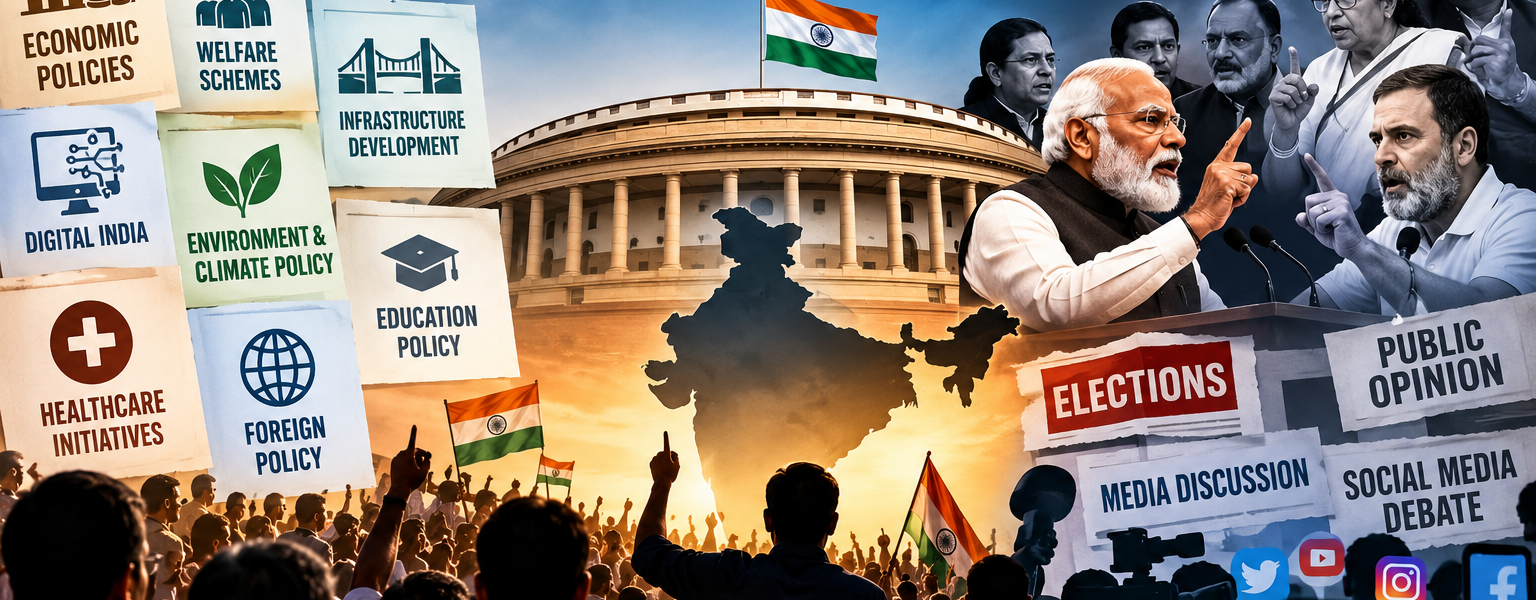
Policy discussions in India cover a wide range of subjects rather than one single political issue. Major areas include economic policy, welfare delivery, infrastructure, digital governance, education, healthcare, agriculture and employment.
Some policy decisions have nationwide implications, while others primarily affect particular sectors or groups. Parliament, state legislatures, government departments, courts, political parties, industry bodies and civil society organisations can all contribute to the discussion surrounding these policies.
The political response can also vary depending on the policy and its implementation. A measure may generate support from some groups while attracting criticism or requests for changes from others.
What Happened?
India's policy landscape has evolved significantly over the past decade, with governments placing emphasis on areas such as digital public infrastructure, welfare delivery, infrastructure development, manufacturing, financial inclusion and economic formalisation.
Several policy initiatives have also changed how citizens interact with government services. Digital platforms, direct benefit transfers and online public-service systems have increased the role of technology in governance.
At the same time, policies affecting taxation, employment, agriculture, education, social welfare and business regulation continue to generate political discussion.
The debate generally involves three interconnected questions:
-
What problem is the policy intended to address?
-
How effectively is it being implemented?
-
What are its effects on different sections of society?
These questions can influence political narratives, parliamentary debates and public opinion.
Key Highlights
-
Economic policies: Taxation, investment, inflation, employment and economic growth remain important areas of political discussion.
-
Welfare programmes: Subsidies, social-security measures and direct benefit transfers influence debates about public spending and service delivery.
-
Infrastructure: Roads, railways, housing, energy and urban development can shape discussions around economic development.
-
Digital governance: Digital payments, online government services and digital public infrastructure have changed citizen-government interactions.
-
Agriculture: Policies involving farmers, agricultural markets, rural incomes and food security remain significant political subjects.
-
Education and healthcare: Public spending, accessibility and quality of services continue to generate debate.
-
Social policy: Policies affecting different communities can become subjects of extensive parliamentary, media and public discussion.
Why Government Policies Matter in Indian Politics
Government policies can influence politics because their effects are often experienced directly by citizens.
For example, a change in taxation can affect household finances or business costs. A welfare programme can influence access to financial assistance or essential services. Infrastructure projects can affect transportation, employment and regional development.
The political significance of a policy therefore depends partly on how it is implemented and experienced.
Political parties may use policy performance as part of their arguments during elections and legislative debates. Opposition parties can scrutinise government decisions, while the government can present its policies as part of its development and governance agenda.
This creates an ongoing connection between policymaking and political communication.
Role of Citizens in Public Debate
Citizens are increasingly active participants in policy discussions. Public responses can appear through elections, consultations, petitions, media discussions, community organisations and online platforms.
Social media has particularly changed the speed at which policy-related information spreads. Government announcements can reach large audiences quickly, while criticism and alternative interpretations can also circulate rapidly.
However, fast-moving discussions can make verification important. Official documents, parliamentary records, government data and credible reporting can help readers distinguish confirmed information from claims or commentary.
Expert Analysis: Understanding Policy and Political Debate
Policy analysis generally requires examining more than the announcement of a government decision. Researchers and experts may consider the objectives, funding, implementation mechanism, beneficiaries, administrative capacity and measurable outcomes.
For example, a welfare programme can be assessed not only by the amount allocated but also by how many eligible people receive benefits and whether implementation reaches intended beneficiaries.
Similarly, an infrastructure programme can be examined through investment, completion rates, usage and regional economic effects.
Different experts can reach different interpretations because they may use different indicators or place different emphasis on economic, social or administrative outcomes. Readers should therefore distinguish between documented policy facts and expert or political interpretation.
How Policies Influence Public Discussion
Government policies can shape public debate in several ways:
Economic Impact
Taxation, employment policies, investment rules and government spending can affect businesses, workers and households. Economic consequences often become important topics in political discussions.
Social Impact
Welfare, education, healthcare and other social policies can affect access to public services and opportunities, making them important subjects for citizens and civil society groups.
Political Impact
Policies can become part of election campaigns, parliamentary debates and political communication. Parties may use policy performance to explain their positions or challenge those of their opponents.
Long-Term Impact
Some policy decisions require years before their full effects become measurable. Infrastructure, education, industrial development and institutional reforms are examples where long-term assessment can be particularly relevant.
Latest Updates & Developments
Update 1: Government policy discussions continue to cover economic development, welfare delivery, infrastructure, employment and digital governance.
Update 2: Parliamentary debates, official government announcements and policy documents remain important sources for tracking new decisions and proposed changes.
Update 3: Public discussion increasingly takes place across traditional media and digital platforms, making source verification important when evaluating policy claims.
This section can be updated whenever significant policy announcements, legislative developments or official data become available.
Key Facts
-
Country: India
-
Main institutions: Union Government, Parliament, state governments and public authorities
-
Major policy areas: Economy, welfare, infrastructure, agriculture, education, healthcare and digital governance
-
Public debate: Political parties, citizens, media, experts and civil society organisations
-
Key information sources: Government notifications, parliamentary records, official statistics and credible news reports
-
Primary issue: How policy decisions affect governance, citizens and political discussion
Frequently Asked Questions
Q1. How do Indian government policies influence politics?
Government policies can influence political debate because they affect areas such as taxation, welfare, employment, infrastructure, education and public services. Political parties may discuss their implementation and effects in Parliament, election campaigns and public communications.
Q2. Why are government policies important to public debate?
Policies can directly affect citizens, businesses and communities. Questions about their objectives, costs, implementation and outcomes can therefore become important subjects of discussion among citizens, political parties, experts and the media.
Q3. Which policy areas receive significant political attention in India?
Economic development, employment, welfare, agriculture, infrastructure, education, healthcare, taxation and digital governance are among the areas that frequently feature in political and public discussions.
Q4. How can citizens evaluate government policy claims?
Citizens can examine official government documents, parliamentary records, published data and reporting from credible news organisations. Comparing claims with primary sources can help distinguish verified information from political commentary or unverified information.
Q5. Does every government policy have the same political impact?
No. The political significance of a policy can vary according to its scope, implementation, economic and social effects, and the level of public interest it generates. Some decisions affect specific sectors, while others have nationwide implications.
Q6. How does social media affect policy debates in India?
Social media allows government announcements, political responses and public reactions to spread quickly. It can broaden participation in public discussion, but information shared online may require verification against reliable sources.
Q7. Where can readers follow the latest Indian policy developments?
Readers can follow official government announcements, parliamentary information, government data and credible news organisations such as Credible News for continuing coverage and analysis of major developments.